Data Centers
The Hidden Backbone of Our Modern World
From room-sized mainframes to gigawatt campuses, discover the physical infrastructure that powers our digital world—and how the AI revolution is transforming data centers into the factories of the 21st century.
Data Centers: The Hidden Backbone of Our Modern World
Every time you stream a movie, summon a car, or talk to what feels like a fully formed computational consciousness, you are touching an invisible physical empire. We call it "the cloud," but it isn't in the sky. It lives somewhere very, very real: inside nearly 12,000 buildings worldwide, consuming almost 5% of all electricity in the United States, and flowing through armored, garden-hose-sized cables laid across the darkest parts of the ocean floor.
This is the story of that invisible infrastructure. It's a story that begins in the humming and clattering punch-card rooms of the 1930s, winds through Cold War projects that accidentally birthed the internet, and leads to the gigawatt-scale AI factories being built today—complexes so vast they rival the size of Lower Manhattan.
Today, the U.S. stock market is worth around $60 trillion. A staggering 30% of that value is concentrated in just six companies: Nvidia, Microsoft, Apple, Alphabet, Amazon, and Meta. These are the modern equivalents of the railroad, steel, and oil titans of a century ago. They are building the industrial engine of our time, and its name is the data center.
So how did we get here? How did we build a global machine that stores the sum of human knowledge, connects billions of people, and now, powers the dawn of artificial intelligence? This is the story of the clerks, engineers, and visionaries who turned rooms of paper into a planetary-scale computer, and how their creation is now reshaping our world, our economies, and our energy systems in ways we are only just beginning to understand.
The Mechanical Brain (1900-1950s)00:03:11
If you walked into a large company in the 1930s, you might find yourself in a windowless room humming and clattering like a small factory. Here, amid long rows of metal cabinets and whirring gears, clerks fed stacks of stiff paper cards into behemoth machines. Each card was a sliver of data—an employee's hours, an invoice, a customer's address. Together, they formed the first centralized nerve center for corporate data. These were the first data centers.
A Census Crisis and a Clever Invention00:04:26
The machine at the heart of this revolution was born from a government crisis: the U.S. Census. After officials collected data for the 1880 census, it took them a full seven years to tabulate the results. With the country's population booming, it was clear that human computation could no longer keep pace. The system was breaking.
A man named Herman Hollerith had an idea. He observed how railroad conductors punched tickets to record passenger information, and he realized these holes were a form of data storage. Hollerith designed a machine that could read these punch-holes electrically, automating the tedious counting process. His invention was a spectacular success. The 1890 census, despite a 25% larger population, was completed in just two years and came in $5 million under budget.
This breakthrough caught the eye of Thomas J. Watson Sr., the formidable leader of a company that would soon be known as International Business Machines, or IBM. Watson saw the immense potential of the punch-card tabulator. "There is no limit for this tabulating business," he told his executives in 1927. He sold off IBM's other business lines and poured everything into the tabulating division.
The Hollerith tabulator used punched cards to revolutionize data processing. Learn more — Source: IBM Archives
Big Blue's Lock-In00:05:50
Watson's masterstroke was creating a proprietary 80-column IBM card that worked only with IBM machines. This was an early form of vendor lock-in, a razor-and-blade model for the industrial age. Once a company stored its payroll, invoices, and customer records on IBM cards, migrating to a competitor was nearly impossible. You didn't just lease the machine; you bought into an entire ecosystem.
The timing was perfect. The New Deal in the 1930s created a massive demand for record-keeping. In 1935, the newly formed Social Security Administration signed a landmark contract with IBM. Soon, one of its New York plants was churning out 10 million punch cards per day. For the first time, companies could calculate accounting and invoicing at a massive scale, fueling the growth of global corporations and, tragically, the logistics of modern warfare.
The Electronic Upstart00:09:33
But this mechanical empire was about to be challenged. During World War II, the U.S. Army faced a computational bottleneck: calculating artillery firing tables. The complex math, done by human "computers," was too slow. They funded a team at the University of Pennsylvania to build something radically new: a fully electronic computer with no moving parts.
The result was the Electronic Numerical Integrator and Computer, or ENIAC. It filled a 2,000-square-foot room and could perform 5,000 additions per second. By comparison, IBM's fastest punch-card machine managed just four. It was a stunning, three-orders-of-magnitude leap in performance. Yet, many dismissed it. A Harvard mathematician called the market for computers "foolishness," predicting a national need for maybe half a dozen. Thomas Watson Sr. himself declared that electronic computers had "nothing whatsoever to do with IBM."
His son, however, saw things differently. Thomas Watson Jr., a veteran of the war, was convinced that electronics were the future. This set the stage for an intergenerational battle for the soul of IBM, a clash between the mechanical past and the electronic future that would reshape the world of computation.
The SAGE System: A Digital Shield00:17:12
As the Cold War escalated, a new kind of threat emerged. Soviet long-range bombers could cross the Arctic and reach American cities in hours, leaving a terrifyingly short two-minute window to detect and intercept an attack. The U.S. air defense system, built for a slower world, was dangerously obsolete. This existential threat would accidentally give birth to the networked world.
In 1951, an MIT lab demonstrated it could process live radar data in real-time, proving that automated computing could close the response gap. The challenge was scaling this prototype into a 24/7 national defense system. Thomas Watson Jr., locked in his battle to push IBM into electronics, saw this as a golden opportunity. He lobbied hard, and in 1954, IBM won the contract for what would become the SAGE (Semi-Automatic Ground Environment) system.
The scale was unprecedented. The SAGE contract was worth over $500 million ($5.5 billion today), one of the largest government contracts ever awarded. At its peak in the 1960s, the system was a network of 27 centers across North America, each housing a pair of massive, custom-built IBM computers for redundancy. These were acre-sized floors drawing megawatts of power, all connected by the era's newest technology: modems sending data over leased telephone lines.
SAGE was more than just a collection of powerful computers; it was the first time machines communicated with each other in real-time at scale. It introduced the core tenets of modern data centers—redundancy, massive power draw, and, most importantly, connectivity. A threat detected by a radar station in Maine could be instantly computed and relayed to a command center in New York. A new era of interconnected computing had begun.
The Semi-Automatic Ground Environment (SAGE) was the first large-scale computer network, connecting 27 data centers across North America in the 1950s-60s. Built by IBM for the US Air Force, it was designed to detect and track Soviet bombers during the Cold War. SAGE pioneered many concepts we take for granted today: real-time data processing, networked computers, interactive displays, and even the light pen—a precursor to the mouse.
Video: Computer History Museum
From Air Defense to Airline Tickets00:20:23
The commercial world was watching. In the 1960s, air travel was booming, but the reservation process was a logistical nightmare. Booking a single seat could take up to 90 minutes, involving phone calls and clerks physically pulling cards from filing cabinets. American Airlines, seeing its operations buckle under the strain, approached IBM to build a commercial version of the SAGE system.
The result was Sabre, a centralized reservation system powered by two IBM mainframes. Travel agents could now query seat availability from a terminal and book a flight in seconds. By the mid-60s, Sabre was handling 40,000 reservations a day. It was the birth of e-commerce, the first time something of value was bought and sold over a computer network.
The Glass Houses Were King (1970s)00:23:23
By the 1970s, IBM was king. The company's mainframes, often showcased behind glass walls in what were dubbed "glass houses," were the undisputed nerve centers of global business. By 1970, IBM accounted for an astonishing 6.8% of the entire U.S. stock market—a level of dominance similar to Nvidia's today. But the reign of the centralized mainframe was about to be challenged by a revolution that would put computing power directly into the hands of individuals.
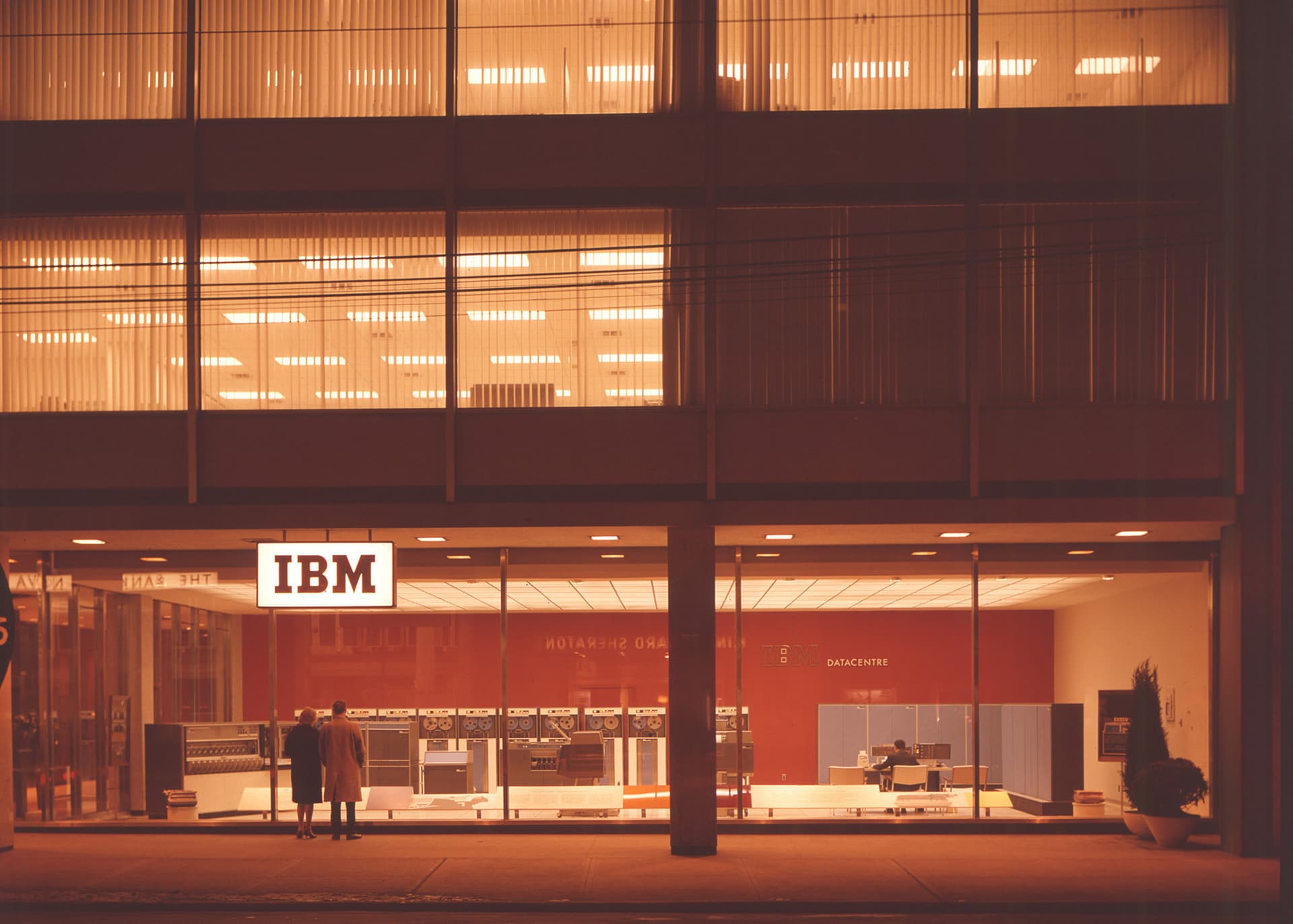
IBM mainframes in their iconic "glass house" data centers dominated computing in the 1970s. By 1970, IBM accounted for 6.8% of the entire U.S. stock market. Learn more — Source: IBM Archives
The Birth of the Internet (1960s-1980s)00:27:27
ARPANET and Packet Switching00:27:27
While corporations were building private networks, the U.S. government was facing another Cold War fear. The 1957 launch of Sputnik by the Soviet Union sent a shockwave of panic through the American establishment. In response, President Eisenhower created the Advanced Research Projects Agency, or ARPA, to ensure the U.S. would never again be caught by a technological surprise.
ARPA's mission included designing a communication network that could survive a nuclear attack. The key was decentralization. A young Pentagon official named Bob Taylor, frustrated by having to use three separate terminals to connect to three different research computers, secured a million-dollar budget to connect them all. This project, ARPANET, introduced a revolutionary concept called "packet switching." Instead of a dedicated phone line, messages were broken into small "packets," each sent independently through the network and reassembled at the destination.
In 1969, the first node of the ARPANET—a fridge-sized router called an Interface Message Processor (IMP)—was delivered to UCLA. A few weeks later, a second arrived at Stanford. The first message sent between them was supposed to be "LOGIN," but the system crashed after two letters. The first message in internet history was "LO." From these humble beginnings, the network grew, adding a new university node almost every month. The unexpected killer app? Not sharing computing power, but simple email—connecting people.
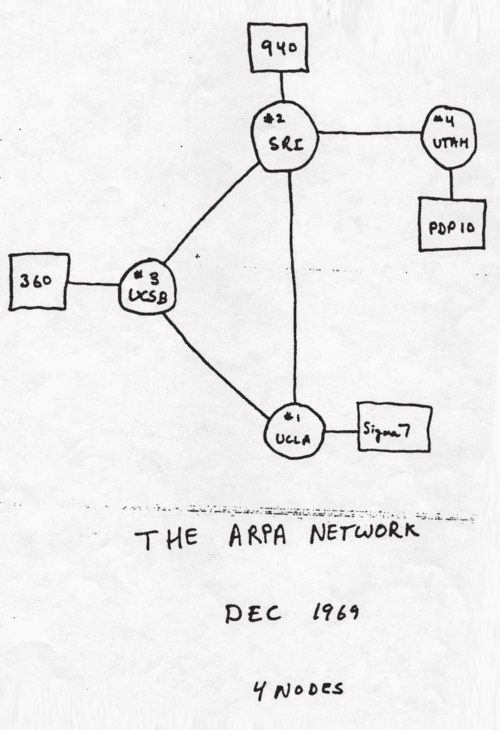
A sketch of the ARPANET in December 1969. The nodes at UCLA and the Stanford Research Institute (SRI) are among those depicted.
As other networks sprang up, researchers Vint Cerf and Bob Kahn developed a common language to connect them all: TCP/IP. On January 1, 1983, all ARPANET hosts switched to this new protocol, marking the official birth of the "internet"—a network of networks. The foundation for the modern digital world had been laid.
The Personal Computer Arrives (1980s-1990s)00:38:01
From Hobbyist Kits to Business Tools00:39:42
In January 1975, the cover of *Popular Electronics* magazine featured the Altair 8800, a computer kit you could build at home for $439. For a pair of young hobbyists named Bill Gates and Paul Allen, this was a pivotal moment. They saw that computing had finally become cheap enough for the average person. They immediately formed a company called Microsoft to write software for this new device.
Soon after, the Apple II launched in 1977, followed by the killer app that justified its purchase for businesses: VisiCalc, the first electronic spreadsheet, in 1979. Suddenly, a financial analyst could model a budget at their desk without waiting in line for the company mainframe. The personal computer (PC) wasn't just a toy anymore; it was a powerful business tool.
IBM, seeing its glass house begin to crack, responded with surprising agility. It launched a skunkworks project in Boca Raton, Florida, far from its New York headquarters, to build its own PC using off-the-shelf parts. In 1981, the IBM PC was born, running an operating system licensed from the six-year-old Microsoft: MS-DOS. IBM thought the money was in the hardware. They were wrong. A flood of IBM-compatible clones commoditized the hardware, and the "Wintel" duopoly of Microsoft and Intel came to dominate the decade.
Connecting the Desktops00:44:25
The "personal" in personal computing soon became a problem. How do you collaborate with a colleague when your work is trapped on a floppy disk? How do you share a printer without physically running a disk down the hall? The solution was the local area network, or LAN. Technologies like Ethernet wired office floors together, connecting PCs into a corporate network.

Early personal computers brought computing power to individuals — Source: Computer History Museum
This gave rise to a new model: client-server architecture. Your desktop PC acted as the "client," accessing files or services from a more powerful, centralized PC called a "server" located in a back room or closet. Companies like Novell built their fortunes on software that managed these shared disks and printers. This server closet, filled with a sprawling mess of specialized appliances, was the next evolutionary step for the data center—smaller, more distributed, but still a critical hub of corporate information.
Walmart's Eye in the Sky00:46:50
While most companies were wiring up their offices, one retail giant was thinking on a planetary scale. In the late 1980s, when a cashier at Walmart scanned a tube of toothpaste, a satellite dish behind the store beamed the transaction data to the company's mainframe in Bentonville, Arkansas. This wasn't fast enough for Sam Walton's relentlessly efficient company.
Walmart invested $24 million—a massive sum at the time—to build its own private satellite network, the largest in the world. This system gave them a real-time, unified view of their entire operation. By mining this data, they made a legendary discovery: in the days before a hurricane, sales of Strawberry Pop-Tarts would increase sevenfold. This insight allowed Walmart to preemptively stock stores in a storm's path with pallets of the popular snack, a brilliant fusion of meteorology and data analytics.
To power this analysis, Walmart became the owner of the world's first commercial one-terabyte data warehouse, built with a company called Teradata. By 2001, just nine years later, that warehouse had grown to 70 terabytes. The age of big data had arrived, powered by private data centers that were becoming the strategic heart of modern business.
The first broadcast of Walmart's satellite network — Source: Walmart Museum
The Commercial Internet Takes Root (1990s)00:49:15
By the early 1990s, the internet had escaped the lab. What began as the ARPANET had evolved into the NSFNET, a government-funded backbone connecting universities and research institutions. Between 1986 and 1993, the number of computers on this network exploded from 2,000 to over 2 million. But there was a catch: commercial traffic was strictly forbidden. The internet was a public highway with no on-ramps for business.
The Parking Garage That Became the Internet's Capital00:51:29
This created a bottleneck. The NSFNET was a hub-and-spoke system; if a commercial network in New York wanted to connect with one in Philadelphia, their traffic had to travel up to the non-commercial government backbone and back down. There was no neutral place for them to meet and exchange data directly.
In 1992, a group of network engineers gathered over beers in Virginia and came up with a solution. They decided to physically connect their networks in a repurposed parking garage in Tysons Corner, a suburb of Washington, D.C., dense with defense contractors and early internet providers. This makeshift hub became known as Metropolitan Area Exchange-East, or MAE-East.
The concept was explosive. If you wanted to be on the commercial internet, you brought your routers to this garage and plugged in. Within a few years, an estimated half of the world's internet traffic flowed through this single building. An email from London to Paris would likely route through a parking garage in suburban Virginia. This accidental hub demonstrated a powerful gravitational pull: connectivity begets more connectivity.
Carrier Hotels and Meet-Me Rooms00:52:43
The MAE-East model evolved into a more formal business known as "carrier hotels" or "colocation centers." These were neutral buildings where dozens of different internet service providers (ISPs) and telecom companies could install their equipment side-by-side in "Meet-Me Rooms." Instead of every network digging up streets to connect to every other network, they could simply run a cable across a room.
Buildings like One Wilshire in Los Angeles, once filled with law offices, transformed into some of the most valuable real estate on the planet. Floors were packed with thousands of servers and cross-connects, forming a dense physical marketplace for bandwidth. This created an elastic infrastructure, allowing the burgeoning internet companies of the dot-com boom to scale up their connectivity on demand without building it themselves.
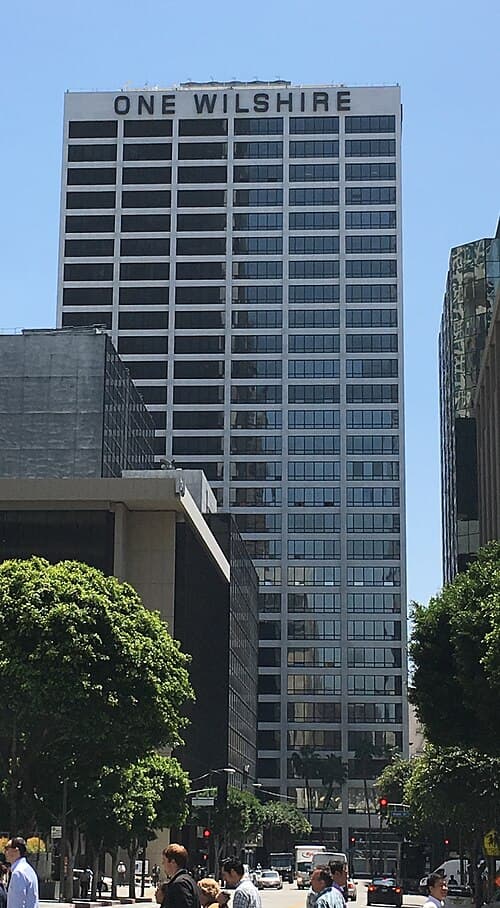
One Wilshire building in downtown Los Angeles, the most interconnected carrier hotel in the western United States. Its meet-me rooms house hundreds of network providers, making it a critical hub of the internet. Learn more — Source: Wikimedia Commons
The Dot-Com Boom and the Fiber Overbuild00:53:30
In May 1995, Bill Gates wrote his famous "Internet Tidal Wave" memo, declaring the internet the most important development since the PC. That same year, Netscape, maker of the first popular web browser, went public in a frenzy that ignited the dot-com mania. The web exploded from 23,000 sites in 1995 to over 10 million by 2000.
Bill Gates' landmark May 26, 1995 memo to Microsoft executives, marking Microsoft's strategic pivot to embrace the internet.
An unprecedented infrastructure build-out followed. To launch a website, you had to spend a significant chunk of your venture capital on physical servers, which you then installed in a colocation facility like those run by Exodus Communications. Carriers like WorldCom spent half a trillion dollars laying fiber optic cable, convinced it was impossible to overbuild.
This frenzy extended beneath the oceans. Since the first transatlantic fiber optic cable landed in 1988, companies had been laying these armored garden hoses to connect continents. The dot-com boom poured billions into wiring the globe. By 2001, however, the bubble burst. Companies like Exodus went bankrupt, and the market collapsed. It was revealed that only 3% of the newly laid fiber was actually "lit" or in use. But this vast, overbuilt infrastructure—the carrier hotels, the dark fiber, the undersea cables—wouldn't go to waste. It would become the foundation for the next, even bigger, wave of digital transformation.
Rise of the Hyperscalers (2000s)01:16:13
The dot-com tide went out, leaving a landscape of bankrupt startups and deeply discounted infrastructure. The application layer of the internet boom had died, but the physical layer—the fiber in the ground, the carrier hotels, the empty data centers—survived. This fire sale of assets created the perfect conditions for a new kind of company to emerge: the hyperscaler.
Amazon's Accidental Empire01:16:13
In the late 1990s, Amazon.com was on a mission to become the "everything store," but its own infrastructure was threatening to bankrupt it. The company was spending a fortune on expensive, high-margin servers from vendors like DEC, a model that clashed with its low-margin retail business. Worse, its software was a tangled monolith, making it painfully slow to launch new product categories.
Around 2002, CEO Jeff Bezos had had enough. He issued his famous API mandate: every internal team had to expose its functionality through well-documented service interfaces. There would be no backdoors or direct links; teams had to communicate as if they were external entities. Anyone who didn't comply would be fired. This forced redesign planted the seeds of a revolutionary idea: if Amazon's internal services were good enough to power its own sprawling business, why not rent them to the rest of the world?
This was a fundamental shift. For decades, running an online business meant buying expensive servers and over-provisioning for peak demand. Amazon flipped this model on its head. In March 2006, it launched Simple Storage Service (S3), allowing anyone to store a file "in the cloud" and access it from anywhere. A few months later came Elastic Compute Cloud (EC2), which let developers rent a virtual server by the hour. You could now launch an internet startup with a credit card, paying only for the computing you actually used.
The Magic of Virtualization01:21:45
The key technology that made this utility model possible was virtualization. Pioneered by VMware, founded in 1998 by Diane Greene and Mendel Rosenblum, virtualization allowed a single physical server to run multiple "virtual machines," each with its own operating system. This dramatically increased utilization. Instead of dozens of servers sitting idle in a corporate closet, Amazon could pack the workloads of hundreds of customers onto a single, efficiently run machine.
This created a Cambrian explosion for startups. Companies like Dropbox and Netflix were built almost entirely on top of Amazon Web Services (AWS). Netflix, after a major database failure in 2008 crippled its DVD-shipping business, went all-in on AWS. This move allowed it to scale into a global streaming giant, proving to the world that the cloud was reliable enough for even the most demanding workloads. The number of objects stored in S3 skyrocketed from 10 billion in 2007 to over 400 trillion by 2023.
Google's Warehouse-Scale Computer01:36:25
While Amazon was building a utility for others, another company was building an even more radical infrastructure for itself. Google, founded in 1998, was growing at a dizzying pace. By 2006, it was processing 10,000 search queries every second. To handle this scale, Google rejected the industry's expensive, off-the-shelf servers.
In its early days, Google engineers famously mounted motherboards on corkboard, held together with zip ties and cooled by cheap box fans. Their philosophy was heresy in the buttoned-up IT world: assume individual components will fail. Reliability shouldn't come from expensive hardware, but from resilient software that could intelligently route around failures. They built their own distributed file system (Google File System) and their own cluster manager (Borg) to orchestrate a fleet of cheap, commodity PCs.
This thinking culminated in their first purpose-built data center in The Dalles, Oregon, which came online in 2006. Google engineer Urs Hölzle argued they shouldn't think of it as a building full of computers, but as one single, "warehouse-scale computer." This perspective drove a relentless focus on efficiency. They pioneered hot-aisle/cold-aisle containment to manage airflow and even put small batteries on each server rack instead of relying on a massive, facility-wide backup system. The data center itself had become the computer.
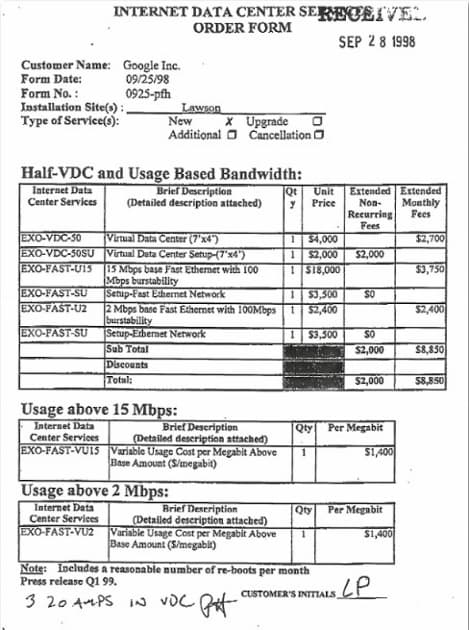
Google's first data center bill from Exodus Communications, dated September 25, 1998. The bill totals just $8,830 per month for their initial colocation services—a modest beginning for what would become one of the world's largest data center operators.
The Cloud Matures (2010s)01:58:28
By the mid-2000s, Microsoft was the undisputed king of software. Windows powered 90% of desktops, and Office was a license to print money. But a threat was emerging. Internet-native companies like Google and Salesforce were proving that powerful applications could be delivered through a web browser, with no CD-ROM required. The cloud wasn't just for backend infrastructure; it was coming for the desktop itself.
Microsoft's Existential Pivot01:58:28
For Microsoft, this was an existential crisis. Its entire business was built on selling software licenses for machines that sat in offices and homes. To lead the charge into this new world, they hired Ray Ozzie, the creator of Lotus Notes, as Chief Software Architect. In 2005, Ozzie published a 5,000-word manifesto titled "The Internet Services Disruption," calling for a decisive pivot. "They're increasingly drawn towards the simplicity of services…that just works," he wrote. "We must respond quickly and decisively."
Microsoft began pouring billions into building its own hyperscale data centers, like the massive campus in Quincy, Washington, which drew cheap hydropower from the Columbia River. This was a wrenching cultural shift for a software company. In 2007, when Microsoft recruited data center expert Christian Belady from HP, his first reaction was, "What the hell's a mechanical engineer going to do at Microsoft?" He only accepted the job after a personal email from Bill Gates himself, explaining that the cloud was the future.
In 2008, Microsoft unveiled Windows Azure. Unlike AWS's "Lego block" approach, Azure was designed as a seamless extension of Microsoft's existing ecosystem. It gave the millions of developers already using .NET and Visual Studio an easy on-ramp to the cloud. For the corporate IT departments that had trusted Microsoft for decades, Azure was the safe, familiar path into a scary new world. This combination of a massive existing customer base and a trusted enterprise sales motion allowed Azure to rapidly gain ground on AWS.
Facebook Opens the Blueprints02:18:19
As the social network exploded to hundreds of millions of users, Facebook was also forced to become an infrastructure company. In 2011, it opened its first purpose-built data center in Prineville, Oregon. Like Google, they engineered the building and servers together, achieving an industry-leading level of efficiency.
But then Facebook did something truly revolutionary. In a secretive industry where data center designs were guarded like state secrets, they open-sourced their blueprints. In April 2011, they launched the Open Compute Project (OCP), sharing their designs for servers, racks, and data center facilities with the world.
In April 2011, Facebook open-sourced its data center designs, launching the Open Compute Project. In a secretive industry where designs were guarded like state secrets, this was revolutionary. By commoditizing hardware, Facebook increased supplier competition and fundamentally changed the data center supply chain.
The motivation was strategic. Facebook's business was selling ads, not cloud services. By commoditizing the hardware, they could increase competition among their suppliers and drive down their own costs. The move was a massive success. Microsoft, Google, and even telcos eventually joined, contributing their own designs, like Google's 48-volt rack power system. OCP fundamentally changed the data center supply chain, shifting power from vendors to the hyperscale customers.
The Sustainability Race02:25:33
This new era of transparency kicked off a fierce competition among the hyperscalers on another front: sustainability. The race began with a simple metric popularized by Christian Belady and The Green Grid consortium: Power Usage Effectiveness, or PUE. It measured how much energy a data center consumed versus how much actually reached the IT equipment. An ideal PUE is 1.0.
Google, Microsoft, and Facebook all raced to lower their PUE, pushing it from an industry average of over 2.0 down to an incredible 1.1. As PUE plateaued, the bragging rights shifted to carbon neutrality, water usage, and eventually, 24/7 matching of energy consumption with renewable generation. These corporate pledges became a major driver of new wind and solar development, as hyperscalers became some of the largest buyers of clean energy in the world.
The Great Acceleration (2020-Present)02:32:48
By 2020, the cloud was mature, powerful, and largely invisible—a stable utility powering the digital world. Then, the world shut down. The COVID-19 pandemic forced a global, overnight shift to remote work, online learning, and digital everything. This event became the ultimate stress test for the global data center infrastructure, compressing five years of adoption into 18 months.
COVID and the ZIRP-Fueled Boom02:32:48
The surge in demand was staggering. In early 2020, Zoom's daily meeting participants skyrocketed from 10 million to 300 million in just four months. Google Meet saw its peak usage jump 30-fold. E-commerce exploded. Incredibly, the internet didn't break. The elastic promise of the cloud proved real as hyperscalers spun up capacity to meet the unprecedented demand.
This demand wave collided with another powerful force: ZIRP, the Zero Interest-Rate Policy enacted by central banks. With the cost of capital near zero, money flooded into infrastructure. For data center developers, it was like getting a mortgage with no interest; they could build massive campuses speculatively, far ahead of any signed leases. Private equity giants like Blackstone poured in, buying QTS Realty Trust for $10 billion in 2021 and treating data centers like a stable, utility-style real estate asset.
A decade before, a large data center lease was for 5 megawatts. By the end of the 2010s, hyperscalers were reserving entire 100-megawatt campuses—a 20-fold increase in scale. The industry shifted from leasing square footage to leasing raw power.
The Crypto Wildcard02:41:20
Adding to this strain was a new, voracious consumer of electricity: cryptocurrency mining. Unlike traditional data centers that valued reliability and low latency, crypto miners had a single objective: perform as many computations as possible for the lowest possible electricity cost. Theirs was not an IT business, but a power arbitrage business.
Hordes of miners descended on places with cheap hydropower, like Iceland and Eastern Washington, sometimes outbidding the cloud providers for power. They sought out stranded energy assets, like flared natural gas at oil fields, placing mobile data centers in shipping containers to turn waste into computation. In 2021, when China banned crypto mining, the industry fled, with the U.S. share of the global network jumping from 4% to nearly 40% in under two years. At its peak, crypto mining consumed nearly as much power as all other U.S. data centers combined, a dress rehearsal for the even greater power demands to come.
The AI Factory (Present & Future)02:45:53
For decades, Nvidia was a company for gamers. Its graphics processing units (GPUs) were masters of parallel computation, perfect for rendering realistic 3D worlds. It turned out that the same math required to shade a pixel was also ideal for scientific computing, cryptocurrency mining, and, most consequentially, training machine learning models. A niche hardware maker was about to become the most important company in the world.
The Physics of AI Data Centers02:47:47
This new wave of AI hardware fundamentally changed the physics of the data center. A traditional server rack might consume 5 to 10 kilowatts of power. But a single Nvidia training "box," containing eight H100 GPUs, could draw 10 kilowatts by itself. Packing four of these boxes into a single rack pushed power density up to 40 kilowatts or more—an order of magnitude increase.
This intense heat overwhelmed traditional air cooling. You simply can't move enough air fast enough to prevent the chips from melting. The industry has been forced to shift to direct liquid cooling, mounting cold plates directly on the processors and circulating water to carry the heat away. This has created a complex trade-off between energy and water. While liquid cooling is more energy-efficient, the evaporative cooling towers used to expel the heat can consume millions of liters of water a day, creating intense conflict with local communities in water-stressed regions.
The ChatGPT Moment02:50:00
In 2020, researchers at labs like OpenAI and Google had discovered a powerful truth: "scaling laws." The bigger the model, the more data you fed it, and the more computing power you threw at it, the smarter it got. Recognizing this, Microsoft invested billions in OpenAI, building a dedicated supercomputer with over 10,000 of Nvidia's A100 GPUs to train its next generation of models.
On November 30, 2022, OpenAI decided to release a simple chat interface for its latest model as a public demo. They called it ChatGPT. The response was electric. It hit one million users in five days and 100 million in two months, becoming the fastest-growing consumer application in history. The AI boom had begun, and everyone knew the recipe for success: more chips.
Nvidia's data center revenue exploded, growing nearly tenfold in three years, from $4 billion a quarter to a staggering $39 billion. Its new H100 chip, tailor-made for AI workloads, became the hottest commodity on the planet. A single chip cost $40,000, and hyperscalers were ordering them by the hundreds of thousands.
On November 30, 2022, OpenAI released ChatGPT to the public. Within five days, it had a million users. Within two months, 100 million. No product in history had scaled so fast. The AI gold rush had begun.
The Gigawatt Campus and the Chip War03:03:52
The unique demands of training large AI models are driving another change: unprecedented scale. To train a model efficiently, tens of thousands of GPUs must communicate with each other at near light speed. This is impossible across continents; it must happen within a single, hyper-connected campus. This has given rise to the gigawatt-scale data center. Meta recently announced plans for a 5-gigawatt campus in Louisiana, a $10 billion project spanning 2,000 acres—an area roughly the size of Lower Manhattan.
This compute arms race has ignited a new Cold War between the U.S. and China, centered on chips. The U.S. has imposed sweeping export controls to prevent China from accessing advanced AI chips from Nvidia. In response, China is pouring tens of billions into its domestic chip industry, mandating that its own data centers source chips locally. The battle for technological supremacy is being fought in the silicon foundries of Taiwan and the data center alleys of Virginia.
For nations around the globe, this raises a critical question of "compute sovereignty." With AI data centers concentrated in a handful of wealthy nations, many fear a new digital divide that leaves them dependent on foreign powers for the most critical infrastructure of the 21st century. From a closet full of punch cards to a geopolitical battle for planetary-scale intelligence, the data center has become the stage on which our future is being built.
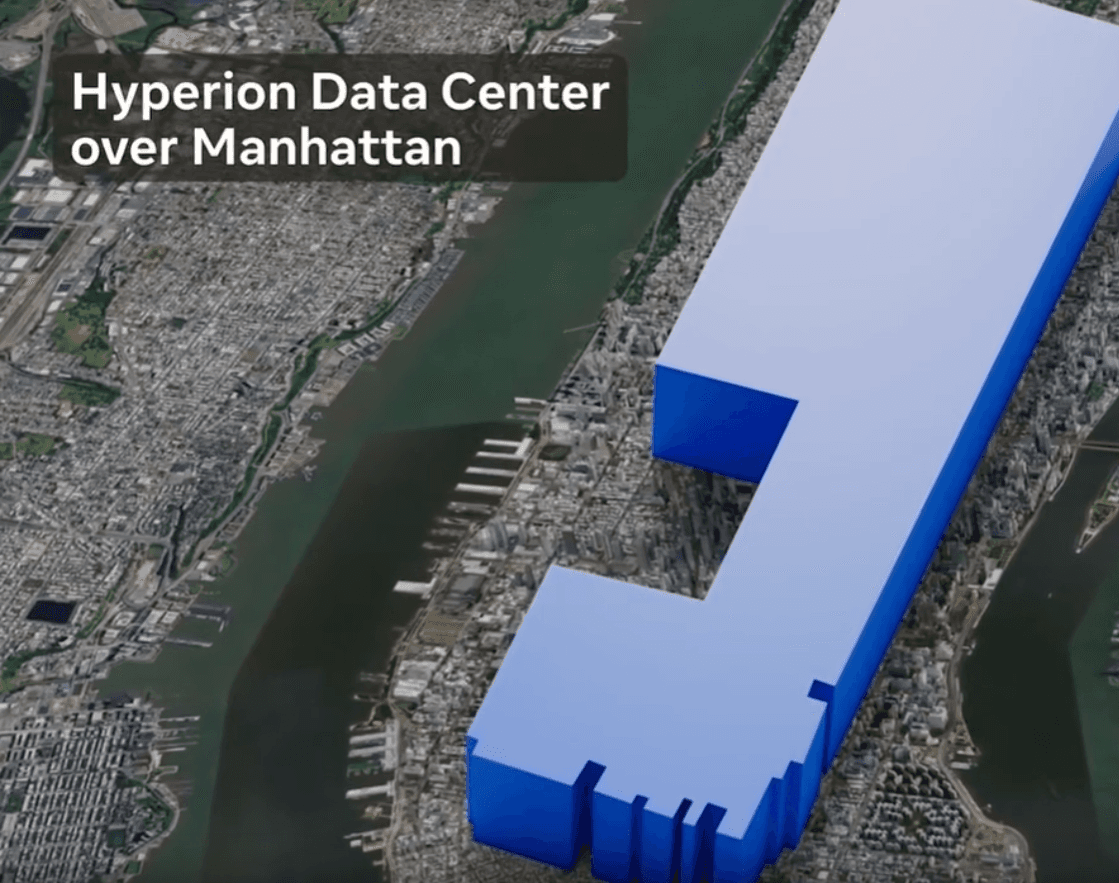
Meta's planned Hyperion data center in Louisiana represents the new gigawatt-scale facilities required for AI training—roughly the size of Lower Manhattan.
Hitting the Power Wall03:05:43
For the first time, the speed of data center growth was throttled not by capital or demand, but by the physical limits of the power grid. You can't just show up and ask a utility to plug in a 100-megawatt facility. The time to get power became the single most critical factor in site selection. Utilities in places like Ireland and Virginia, once eager for new customers, began pushing back, fearing the massive, constant load of data centers would destabilize their grids.
This marked the end of an era of "free" efficiency gains. From 2010 to 2018, the explosion in computing demand was largely offset by massive improvements in efficiency, like the move to the cloud and plummeting PUEs. Total energy consumption by data centers remained surprisingly flat. But by 2020, the low-hanging fruit had been picked. Between 2017 and 2021, the energy use of just Amazon, Google, Microsoft, and Meta doubled. The industry had hit a power wall.
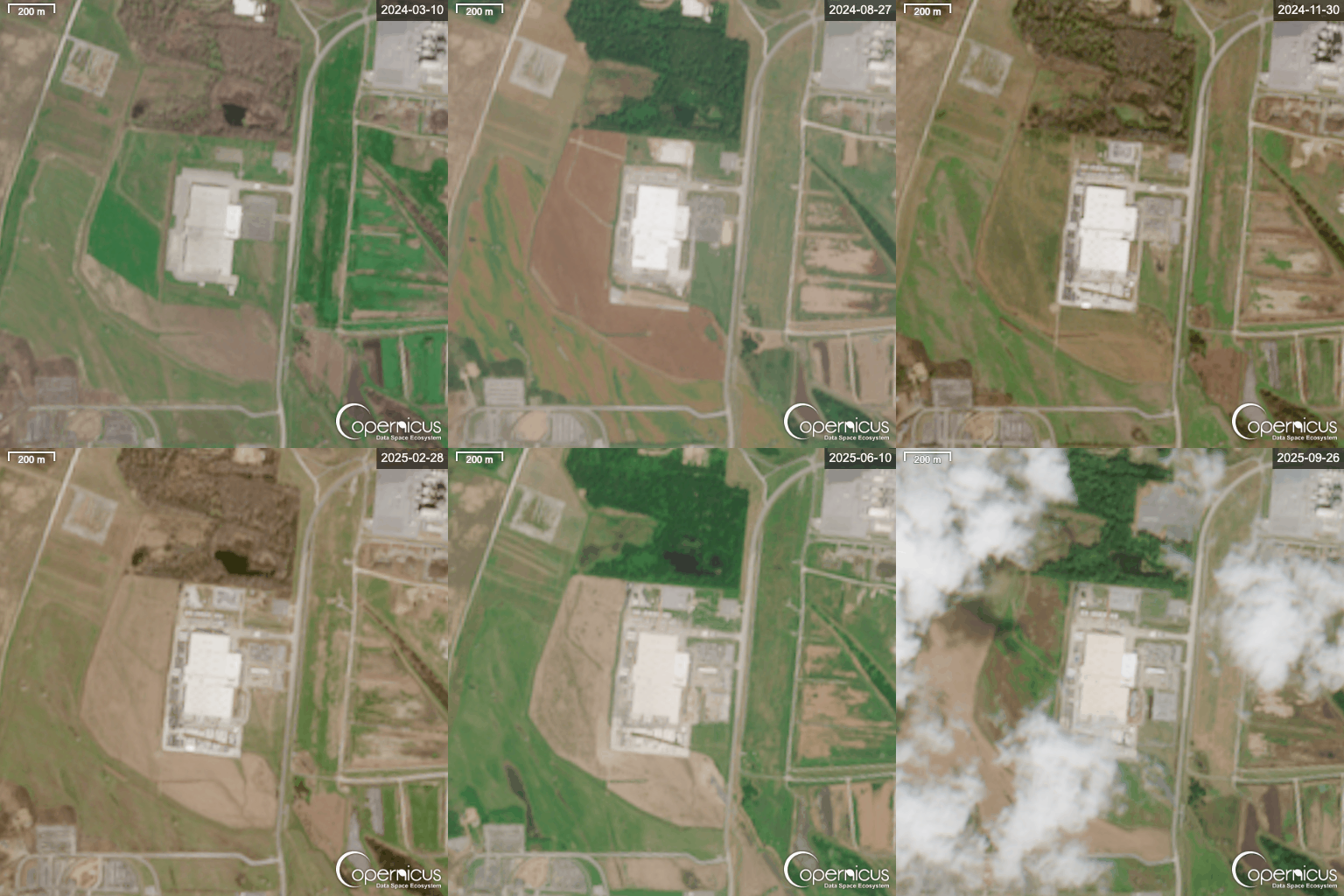
xAI's Colossus 1 facility in Memphis, Tennessee—one of the world's largest AI training clusters, built in record time to power Grok and future AI models.
The Invisible Empire, Made Visible03:33:43
The journey from punch cards to AI factories reveals a story of cascading innovation, where each technological layer built upon the last. The humming rooms of the 1930s gave way to mainframes, which were connected by the internet, which in turn hosted the cloud, now being rebuilt for the age of AI. As we stand in the midst of the greatest technological infrastructure build-out in history, it's worth taking a snapshot of the sheer scale of this invisible world and the patterns that have defined its growth.
The Scale of Today's Invisible Empire03:33:43
Today, there are approximately 11,800 data centers worldwide, with the U.S. hosting over 5,000 of them. This physical footprint covers an estimated 1.5 billion square feet—the equivalent of 28,000 football fields. While vast, it's still ten times smaller than the asphalt of the U.S. interstate highway system alone.
These facilities consume about 4.5% of all U.S. electricity, equivalent to the power used by 17 million households or three cities the size of New York. Globally, their consumption rivals that of the entire United Kingdom. Inside these buildings spin 50 to 100 million servers, holding a collective 15 zettabytes of data. The modern hard drive has become a marvel of engineering: if its read/write head were scaled to the size of a 747, it would be flying at 560 mph just a paper's thickness above a football field, reading and writing every single blade of grass.
All of this is stitched together by approximately 600 active submarine cables, which carry 99% of international internet traffic. This global nervous system has expanded our collective bandwidth by 100-fold in the last decade alone and continues to grow at 25% per year.
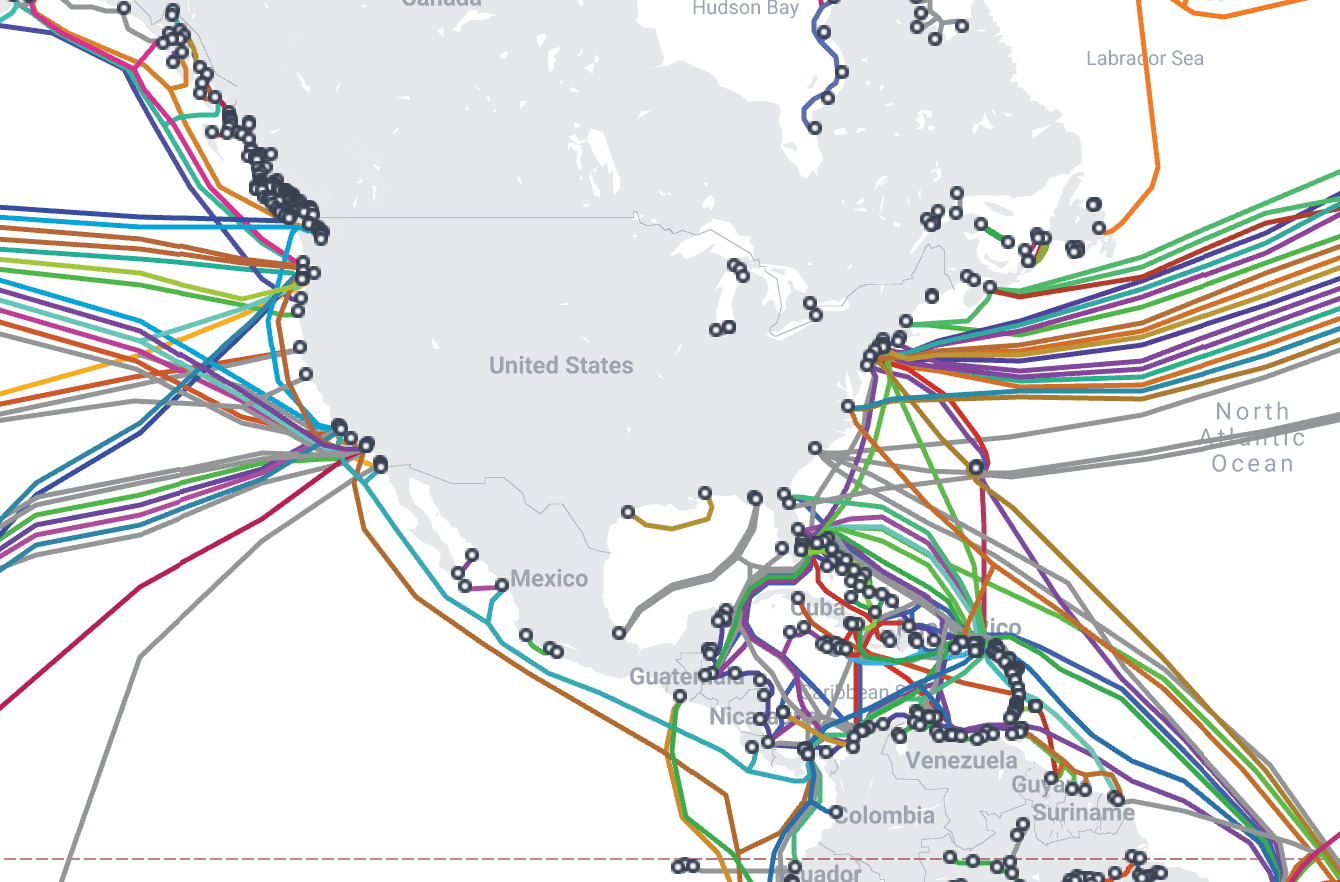
The global submarine cable network forms the physical backbone of the internet. View Interactive Map
Key Themes and Unexpected Patterns03:40:10
Several key patterns emerge from this history. First, the cloud is intensely physical and strangely concentrated. The internet has infinite edges but a shockingly small number of centers. Hubs like Ashburn, Virginia—the undisputed capital—grew almost by accident, their gravity pulling in more and more connectivity until they became irreplaceable.
Second, this is the most perfectly abstracted infrastructure humanity has ever built. You can access the full power of this global machine from anywhere, deploying code to servers around the world without ever seeing a CPU. You don't just use this infrastructure; you live inside it, mediated by its connections from morning until night, even as it tracks your sleep.
Third, unlike railroads or power lines, this infrastructure is in a state of continuous, rapid upgrade. Over the last decade, humanity's compute power has increased 40-fold while energy consumption grew only 2.5-fold, a testament to relentless efficiency gains. Each era's "overbuild"—like the glut of dark fiber from the dot-com bust—has proven to be the essential foundation for the next boom.
Finally, limitations drive innovation. The current power crisis, colliding with our legacy grid, is a massive forcing function. It's pushing for smarter grids, accelerating the deployment of cheap renewables, and driving efficiency gains from the chip to the AI model itself. At the same time, this build-out is creating a new geopolitical landscape, where microchips are the new oil and "compute sovereignty" is a matter of national security, potentially deepening the global digital divide.
The Future Ahead: A Step Change in Progress03:45:00
Of all the great infrastructures, this one feels different because we are living in the middle of its step change. We are on the sharp part of the curve, experiencing a level of capital investment and construction compressed into a timeline that rivals the birth of the electrical grid or the railroad system. The rocket ship is in takeoff, and we are all feeling the G-forces.
We adapt to these new powers with astonishing speed. What was once a breakthrough—streaming video, instant global communication, a conversational AI—quickly becomes baseline expectation. My four-year-old can now program a video game by describing it to an AI. Our workflows, our creativity, and our connection to the world are being reshaped in real time.
This moment presents a profound opportunity. With so much capital and demand reshaping a foundational infrastructure, we can accelerate the transition to clean energy, modernize our aging grid, and build a newly skilled workforce. The challenge is to manage this explosive growth mindfully, addressing the real costs to local communities and global equity. The ultimate goal should be to build these new assets to be as ecologically invisible as possible, ensuring that the engine of the future powers a more prosperous and sustainable world.
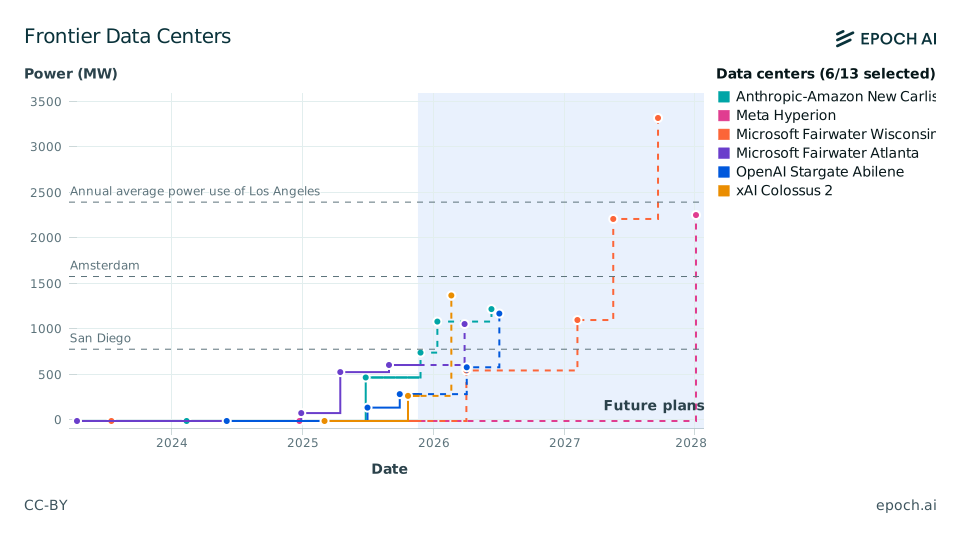
Major frontier AI data centers planned and under construction, including Meta Hyperion, Microsoft's Fairwater facilities, OpenAI Stargate, and xAI Colossus 2. Explore interactive data — Source: Epoch AI
Thanks for listening and learning with us. Drop us a note with thoughts or feedback anytime.
— Ben & Anay
hi@stepchange.showExplore the Data
Interactive charts showing the growth of data centers, internet usage, and computing power from the mainframe era to the AI revolution.
The exponential growth of internet users worldwide, driving demand for data center infrastructure.
Source: Our World in DataMore History Coming Soon
Explore more stories about the technologies and resources that shaped our world. Subscribe to get notified when we publish new historical narratives.
Sources & References
Research Materials & References
Key Books
- Where Wizards Stay Up Late: The Origins of the Internet — Katie Hafner & Matthew Lyon
- Tubes: A Journey to the Center of the Internet — Andrew Blum
- The Big Switch: Rewiring the World, from Edison to Google — Nicholas Carr
- The Greatest Capitalist Who Ever Lived: Tom Watson Jr. and the Epic Story of How IBM Created the Digital Age — Ralph Watson McElvenny & Marc Wortman
- The Datacenter as a Computer: Designing Warehouse-Scale Machines (3rd ed.) — Luiz Barroso, Urs Hölzle & Parthasarathy Ranganathan
- Data Centers: Edges of a Wired Nation — Lars Müller Publishers
Expert Interviews
- Nat Bullard
- Brian Janous
- Christian Belady
- Peter Gross
- Sean James
- Jon Koomey
- Byron Rakitzis
- Ben Gilbert
- Thomas J. Watson — Wikipedia
- The IBM punched card — IBM Archives
- History of IBM — Wikipedia
- Semi-Automatic Ground Environment (SAGE) — Wikipedia
- Sabre (travel reservation system) — Wikipedia
- 1881 Superintendent's Report of the Census — U.S. Census Bureau (PDF)
- Computer History: IBM SABRE Reservation System (1960) — YouTube
- MAE-East — Wikipedia
- Explore the Building — One Wilshire
- How This Building Powers the Internet (One Wilshire) — YouTube
- The Internet Map (2024) — kmcd.dev
- Pacific Crossing-1 (PC-1) — Submarine Cable Map
- Dawn of Data — Virginia Economic Development Partnership
- The Pop-Tarts Phenomenon: Walmart's Data-Driven Supply Chain — Othor Blog
- Amazon Web Services — Acquired Podcast
- Google — Acquired Podcast
- Microsoft Volume II — Acquired Podcast
- Meta — Acquired Podcast
- Urs Hoelzle Google, speaks at OFC Plenary 2017 — YouTube
- Google Data Center Efficiency Best Practices (PDF)
- Ray Ozzie Announces Windows Azure — ZDNet
- The Internet Services Disruption (Ray Ozzie Memo) — Scripting.com
- The Facebook Data Center FAQ — Data Center Knowledge
- Dropbox saved almost $75 million in two years — GeekWire
- NVIDIA: The Machine Learning Company (2006–2022) — Acquired Podcast
- Microsoft builds OpenAI's dream system on Azure — GeekWire
- Inside Story: Oral History of How ChatGPT Built OpenAI — MIT Technology Review
- How Much Does It Cost to Train Frontier AI Models? — Epoch AI
- NVIDIA Contributes GB200 NVL72 Designs to OCP — NVIDIA Developer Blog
- Uptime Institute Cooling Systems Survey 2024 (PDF)
- Data centres and data transmission networks — IEA Tracking Report
- AI's Energy Usage and Climate Footprint — MIT Technology Review
- Electricity prices, data centers, and AI — Associated Press
- US Power Use Forecast to Reach Record Highs (2024–2025) — Reuters
- I Was Wrong About Data Center Water — Construction Physics
- AI Footprint — Sustainability by Numbers
- Three Key Takeaways: Rethinking Load Growth in U.S. Power Systems — Duke University
- Our Commitment to Climate-Conscious Data Center Cooling — Google Blog
- Energy and AI (2020) — Arxiv
- Environmental Burden of Data Centers (2024) — Arxiv
- Impact of AI on Data Centers (2025) — Arxiv
Full sources list available at: Stepchange Show: Data Center Sources